
Cambria Gold Mines Inc. (TSXV: CAMB) (OTCID: AOTVF)] announced the first results from ongoing infill drilling at the Premier Gold Project (“PGP“), located in northwestern British Columbia. Highlights include:
- 73.86g/t Au over 5.0 m (incl. 552.0 g/t Au over 0.5 m) within 17.95 g/t Au over 22.0 m in P26-2686
- 19.63 g/t Au over 1.6 m within 3.98 g/t Au over 15.4 m in P26-2690
- 8.23 g/t Au over 2.0 m within 3.35 g/t Au over 6.0 m in P26-2689
“This drilling at the 602 Zone is delineating high-grade mineralization, which could be accessed with additional development from the recently constructed underground workings at the historic Premier Mine,” said Robert McLeod, President and CEO of Cambria Gold Mines. “Two underground drills are currently delineating the Prew Zone at Premier; our objective is to establish the strong continuity similar to the nine primary shoots that were historically mined at the deposit.”
Results from the first five diamond drillholes completed, totalling 1,815m are reported herein from the “602 Zone” of the Premier-Northern Lights (“PNL“) deposit. Drilling is focused on infill of Indicated and Inferred Resources at the Premier deposits to provide the necessary drill spacing for development planning. The Company is of the opinion that the lack of infill drilling during development was a critical factor in the difficulties encountered during the mining operations that led to a shut down of operations in 2024.
Gold mineralization is hosted within zones of quartz breccia, with sulfide infill and veining both within and outside the breccia zones. Sulfide mineralization includes pyrite, sphalerite, and galena with lesser amounts of chalcopyrite. Visible gold was identified in 2 of the 5 holes reported in this news release, including an intercept of 552.0 g/t Au over 0.5m in P26-2686 (see Figure 3(a)). This intercept occurs within a wider interval of 17.95 g/t Au over 22.0m represented by a well-defined zone of quartz-sulfide-cemented breccias and veins. Gold veining is interpreted as a later stage event occurring within the wider mineralized zone.
The 602 zone plunges gently to the northwest, and the lower part of the zone is truncated at depth by an interpreted off-setting fault, highlighting a potential future exploration opportunity. The zone remains open down plunge.
The Company is also pleased to announce the commencement of underground drilling, with two diamond drills currently turning at the Prew Zone. Surface drilling will recommence in mid-May when winter conditions end, targeting additional zones of the PNL deposit before moving to the Big Missouri and Silver Coin deposits. The Company intends to complete a total of 27,000m of infill development drilling this year across the Premier Project deposits.
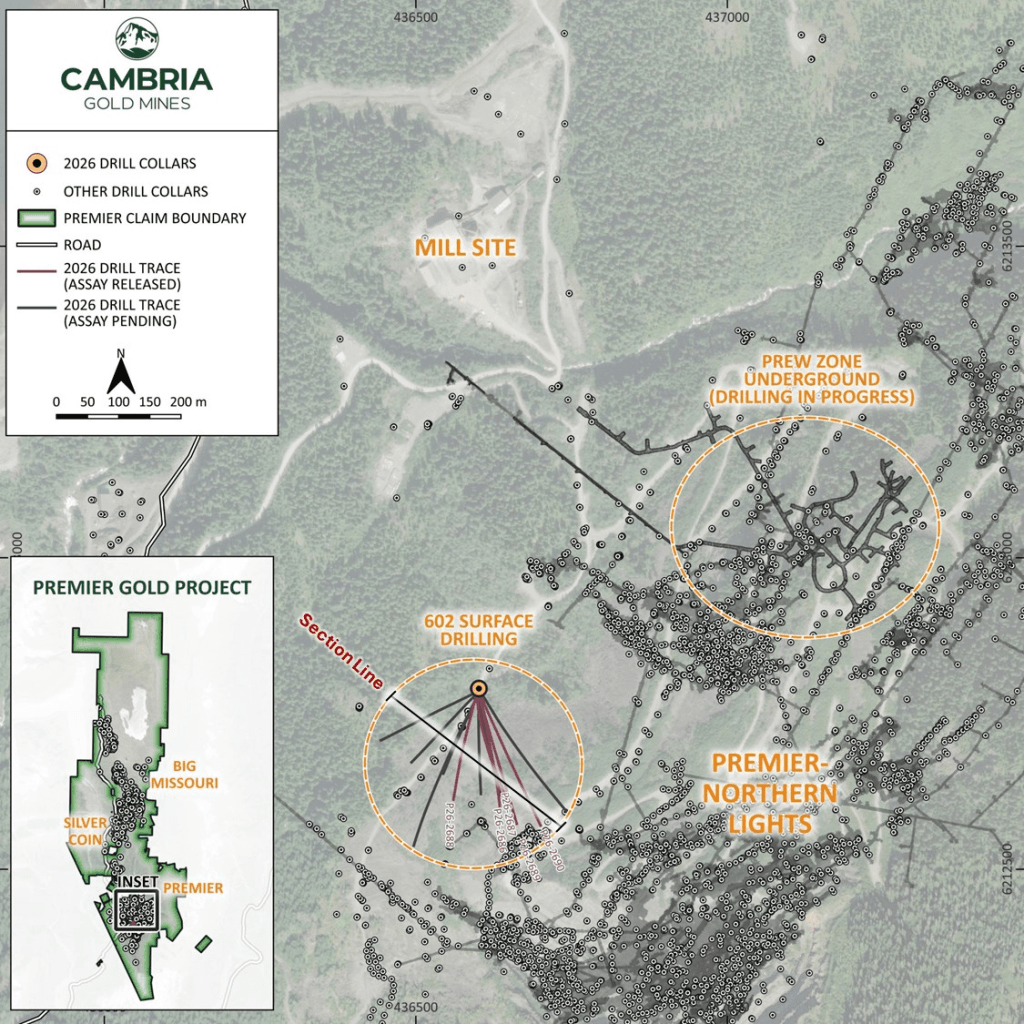
Figure 1: Plan Map showing 602 Zone surface drilling at the Premier – Northern Lights deposit
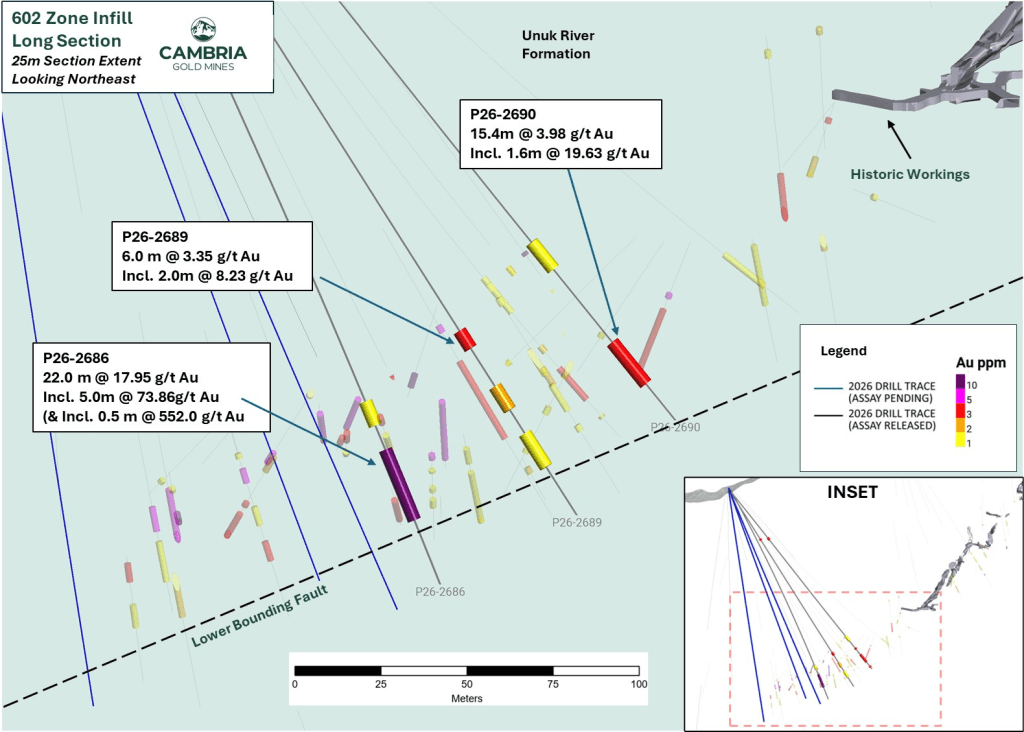
Figure 2: Long section showing reported composite results.
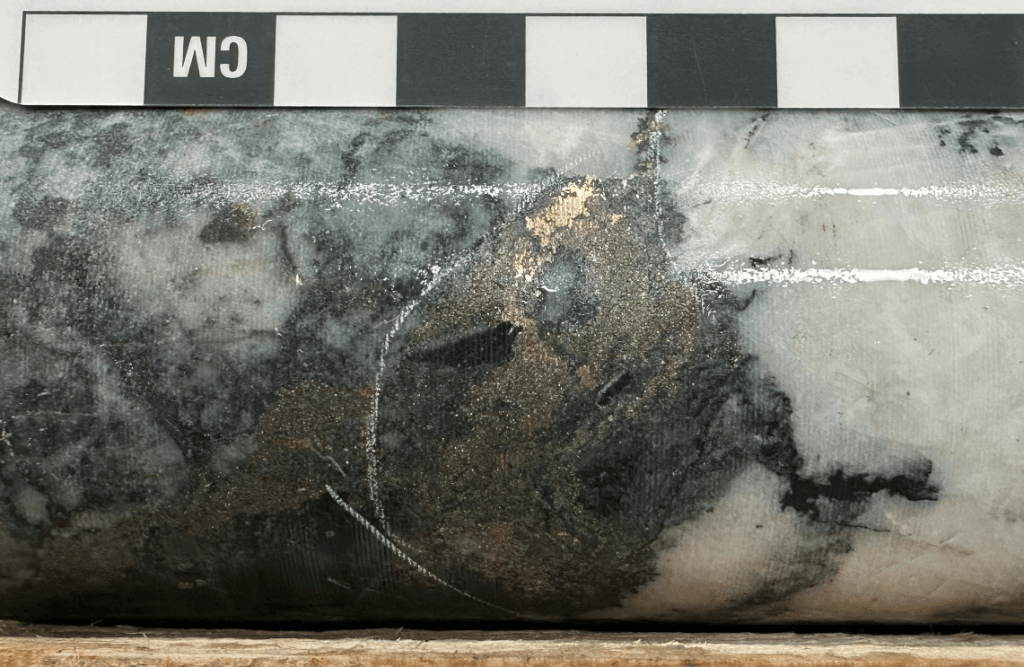
Figure 3a: P26-2686 (324.6 m): Visible gold within quartz-breccia and sulfide mineralization
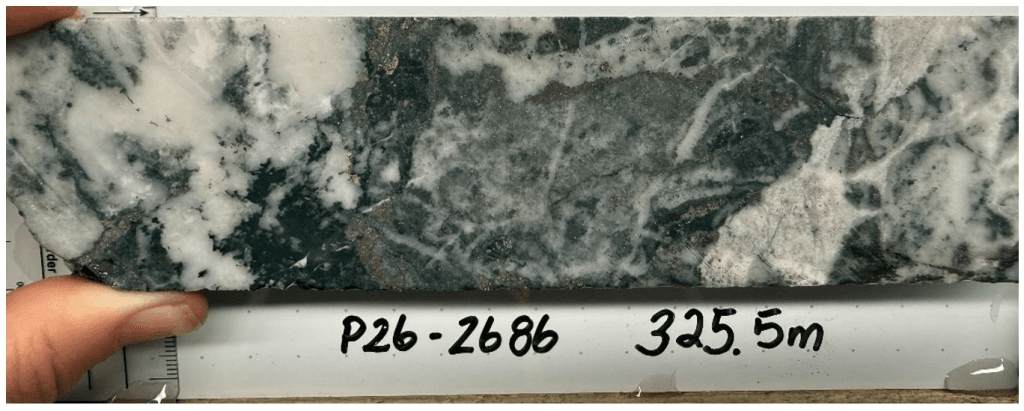
Figure 3b: P26-2686 (325.5 m): Mineralized quartz breccia with sulfide cement in hole P26-2686
Table 1: Drill Results – Significant Intersections:
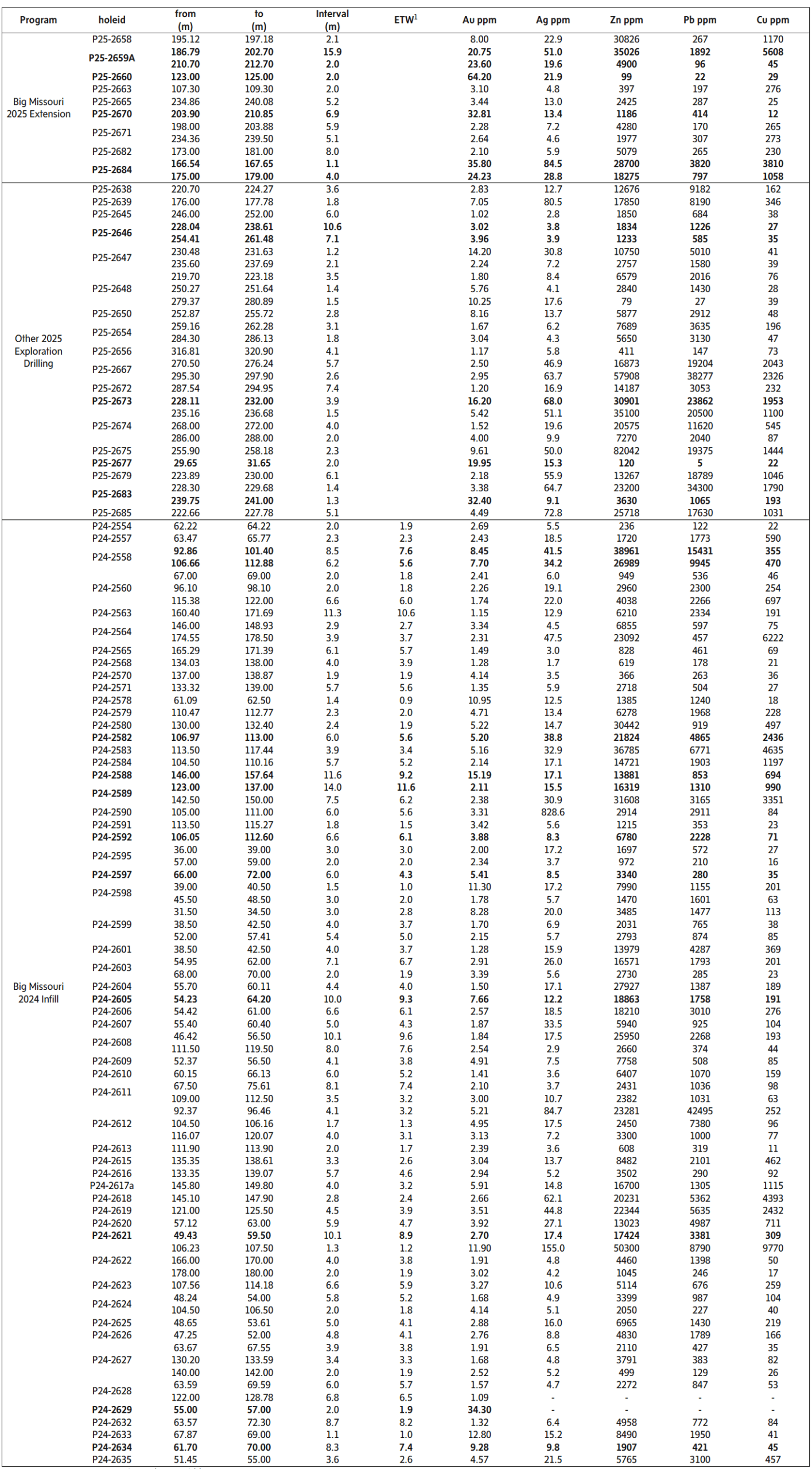
1 – ETW = Estimated True Width. All reported intervals are down-hole lengths, with true width estimates ranging from 96-99% of the reported interval. True widths are estimated based on the angle of the drill hole with the interpreted trend of the mineralized zones.
Composite Calculations for Significant Intersections
Composites for significant intersections were calculated using a 1g/t gold (Au) cut off grade and maximum 3m internal waste. “Including” results are reported at a 10g/t Au cut off grade with maximum 3m internal waste.
Table 2: Drill collar locations and Hole Orientations
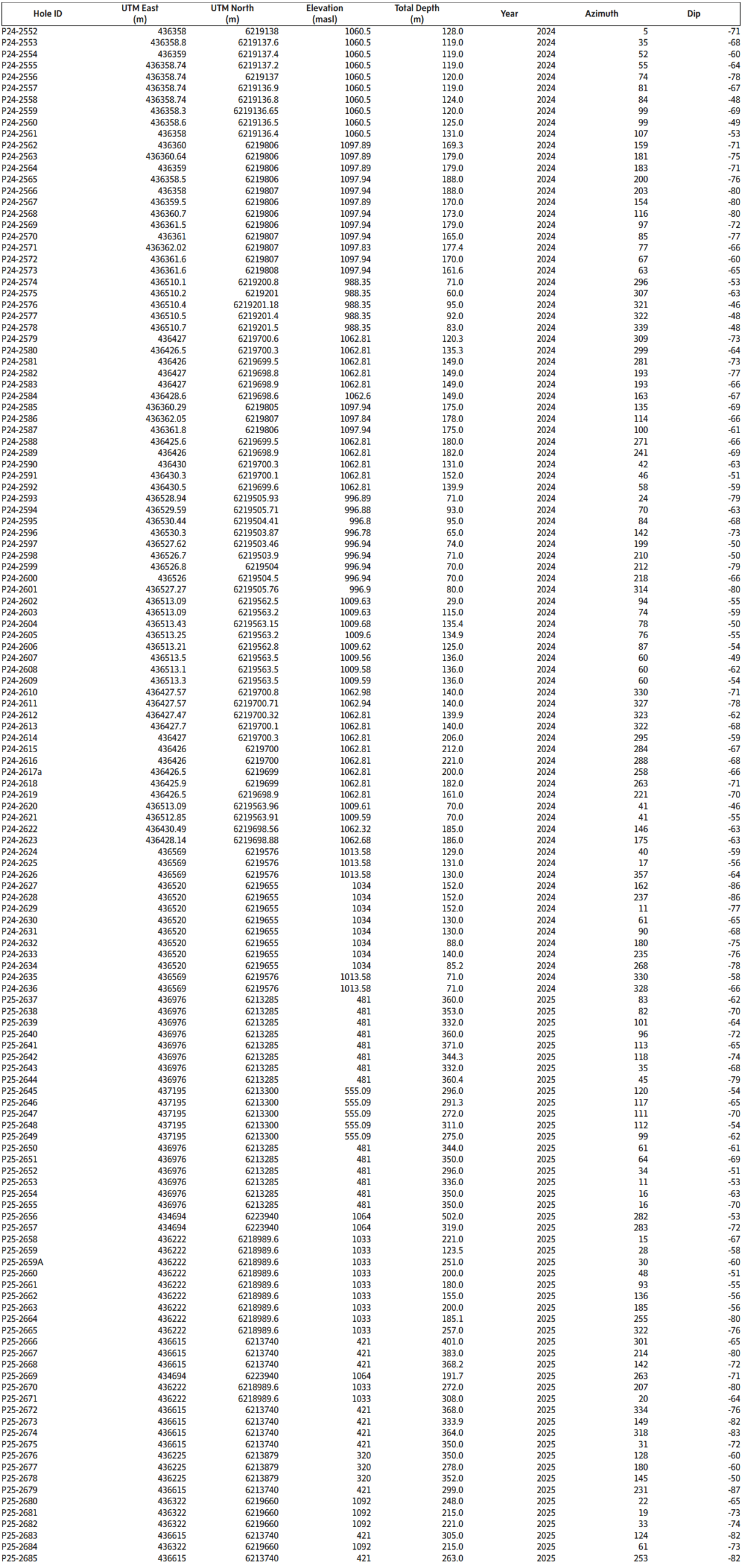
Composite calculations for Drill Results
Composites were calculated using a 1g/t gold (Au) cut off grade and maximum 3m consecutive internal waste. “Including” results are reported at a 10g/t Au cut off grade with maximum 3m waste. Only composites that meet a threshold of 5 Au gram-metres (Au grade x interval thickness) are reported as “significant intervals”. Composites were not subjected to “capping” of gold grades. Cambria believes that applying the 200g/t Au top cut used in the feasibility study effective April 15, 2020 for the Premier and Red Mountain Gold Project would have a negligible effect on composite reporting (see the “Premier & Red Mountain Gold Project – Feasibility Study NI 43-101 Technical Report” dated effective April 15, 2020 prepared by Sacré-Davey Engineering Inc. for more information on capping).
All reported intervals are down-hole lengths, with true width estimates ranging from 64-99% of the reported interval. True widths are not estimated where there is insufficient geological understanding of mineralization controls.
Quality Assurance/Quality Control and Sample Preparation
Core samples from the 2024 drill program were prepared and initially analyzed by 30g fire assay at a non-accredited grade control laboratory facility in Stewart BC, operated under contract by SGS to support the ongoing mine operations. The samples were dried and then crushed to specifications of 75% passing 2mm. The core samples were riffle split to 250g and pulverized to 85% passing 75µm. Samples did not undergo an internal sample QA/QC screening process to verify sample preparation parameters were achieved. In 2025, all 2024 pulps were sent for reanalysis at ALS Canada’s North Vancouver laboratory. ALS re-pulverized the 2024 program pulp samples to ensure samples met specifications and to promote re-homogenization of the sample pulp prior to analytical work.
Core samples from the 2025 drill program were prepared at the ALS preparation lab in Terrace, BC. The samples were dried and then crushed to specifications of 70% passing 2mm. Crushed samples were riffle split to 250g and pulverized to 85% passing 75µm.
Analytical work for all reported 2024 and 2025 results was completed by ALS Canada Ltd. which maintains an internal quality assurance and quality control (QAQC) program and is ISO:17025 certified for the analytical methods used in this release. Pulp splits were sent directly from the two sample preparation facilities to the ALS Canada Ltd. geochemistry laboratory facility in North Vancouver for analysis. Each sample was analyzed for gold by conventional 30g fire assay with atomic absorption finish (Au-AA23) and most samples for multielement analysis by four-acid digest with an ICP finish (ME-ICP61).
Samples over 10ppm gold were re-analyzed by an overlimit 30g fire assay with a gravimetric finish (Au-GRA21). Samples over 100ppm silver were re-analyzed with an ore grade method (ME-OG62) which is a four-acid digest method followed by an ICP-AES finish (up to 1,500ppm). Samples over 1,500ppm silver triggered the overlimit silver fire assay method (Ag-GRA21) which used a 30g aliquot and gravimetric finish. Sampling and storage activities are conducted at the Company’s secure facility in Stewart, British Columbia.
The Company maintained a QAQC program during the 2024 and 2025 drill programs which included the submission and review of coarse blank materials to monitor contamination, certified reference materials to assess analytical accuracy, and quarter-core duplicate samples to infer sampling precision.
Qualified Person and Technical Information:
The scientific and technical information within this news release was reviewed and approved by Blaine Smit, P.Geo. Vice President Exploration for Cambria Gold Mines Inc. Mr. Smit is a “Qualified Person” as defined under National Instrument 43-101 – Standards of Disclosure for Mineral Projects and is of the opinion that the sampling and QAQC practices employed in 2025 met industry standards and results reported within this release are acceptable. While the best practice would be for both sample preparation and analysis to be completed by an accredited laboratory, the QAQC procedures and results for the pulp re-assaying completed by ALS Canada give confidence the reported results for 2024 drilling are also acceptable.
To verify the information related to the 2024 and 2025 drilling programs at Premier, Mr. Smit visited the property in January and February of 2026, reviewed assay grades against mineralized core and sample tags, reviewed QAQC methodology and results, and discussed deposit mineralization and geological controls with on site staff.